

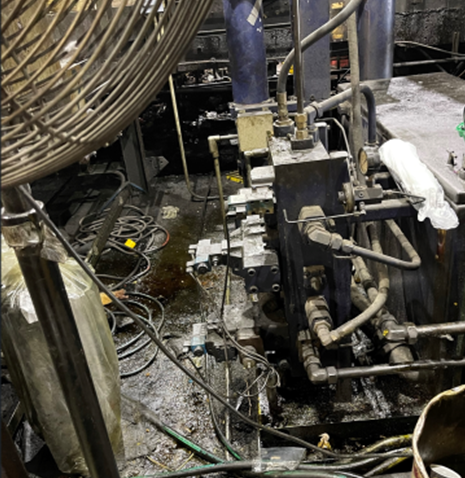
We have assessed hundreds of factories. Many of them are the same and they can be hard to differentiate. This one stood out. A US metal products manufacturer with nearly 300 employees, decades of history, and an operation that was falling apart from the inside yet they didn't know it. The initial request was to create work instructions because they had high turnover. MTG insisted that we conduct an assessment before moving forward on the work instructions. Turns out that work instructions were just the start of their problems.
Equipment held together with improvised fixes. A workforce turning over faster than it could be replaced. Safety hazards everywhere. And production volumes declining year after year with no explanation. This is what we found during a 4-day on-site assessment — and what we recommended to fix it. This blog anonymizes the factory including the company, its location, and exact product. All other details are true.
Written by David Collins III, CEO of Manufacturing Transformation Group. Some details have been changed to protect the client.
The Situation
The factory had been in operation for decades. At its peak, it ran well. But by the time we arrived in 2022, production volume and efficiency had been declining since 2015 — and nobody could explain why. There was no data, no root cause analysis, no strategy to reverse the slide. Just a vague sense that things were getting harder every year.
The client wanted us to create work instructions. Doing so is not a problem (good work instructions are the bread-and-butter of manufacturing consulting), however, we insisted on conducting an on-site assessment first. Generally, work instructions are not the primary cause of problems. The factory agreed and our team traveled to assess the facility, identify what was going wrong, and build a plan to fix it. Our team spent four days on-site walking every inch of the operation.
What we found was worse than anyone expected. One of the consultants called me and asked if we provide hazard pay because of the conditions on-site. No one has ever asked for this before in all the years we have worked in factories around the world. That includes factories where people were pouring molten aluminum by hand while wearing shorts and flip flops. I thought he was joking with me but then I saw that picture and realized that it was not much of a joke.
The Workforce Was Bleeding Out (Sometimes Literally)
In the 18 months before our visit, 302 employees had left the company. The total workforce at the time was 280. That means the factory had turned over more than its entire headcount in a year and a half.
Even more alarming: 128 of those departures happened within the first two months of being hired. New employees were walking in, seeing the conditions, and walking right back out.
Daily absence rates averaged 20.7%. The US industry norm is 2.5-3.5%. Every single morning, supervisors were scrambling to figure out who was actually showing up and how to staff the lines. Production planning was a daily exercise in improvisation.
The employee surveys told the story. Workers did not feel informed about company matters. They had no confidence in leadership. Their opinions were not valued. They lacked the resources to do their jobs. They needed more training and were not getting it. The company had to offer a $50 incentive just to get 70% of employees to complete the survey.
The average age of the workforce was 46 across the company. In maintenance, it was 59. The factory was heading toward a retirement cliff with no succession plan and no strategy to transfer the decades of knowledge that was about to walk out the door. That is why they thought they needed work instructions: to more easily onboard new people.
The Equipment Was Falling Apart
Every piece of equipment we inspected needed repair. Not minor adjustments — fundamental failures that had been patched, ignored, or worked around for months or years.
The primary material handling area had multiple feed lanes. The majority were non-operational. The ones still running had damaged components — collapsed spacers, loose bolts, seized bearings and rollers.
The furnaces were supposed to run at operating temperature. One was running hundreds of degrees below spec. The other was nearly half of where it should be. Sides were hanging off one furnace, allowing heat to escape directly into the building. Chambers 5 and 6 produced no heat at all because the burners were not working. Electrical panels were open with exposed wiring.
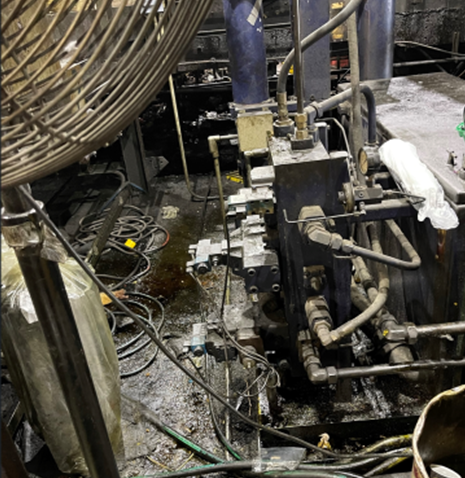
Exposed wiring and poorly maintained components. Electrical panels were found open with wiring in poor condition throughout the facility.
The press had a major hydraulic leak on a cylinder. The pump leaked from the head. Rollers and chain drives from the furnace were worn, missing, damaged, and out of alignment. Conveyors had missing chains and damaged sprockets. Operators were using pipe wrenches and hooks to manually move product that the automation was supposed to handle.
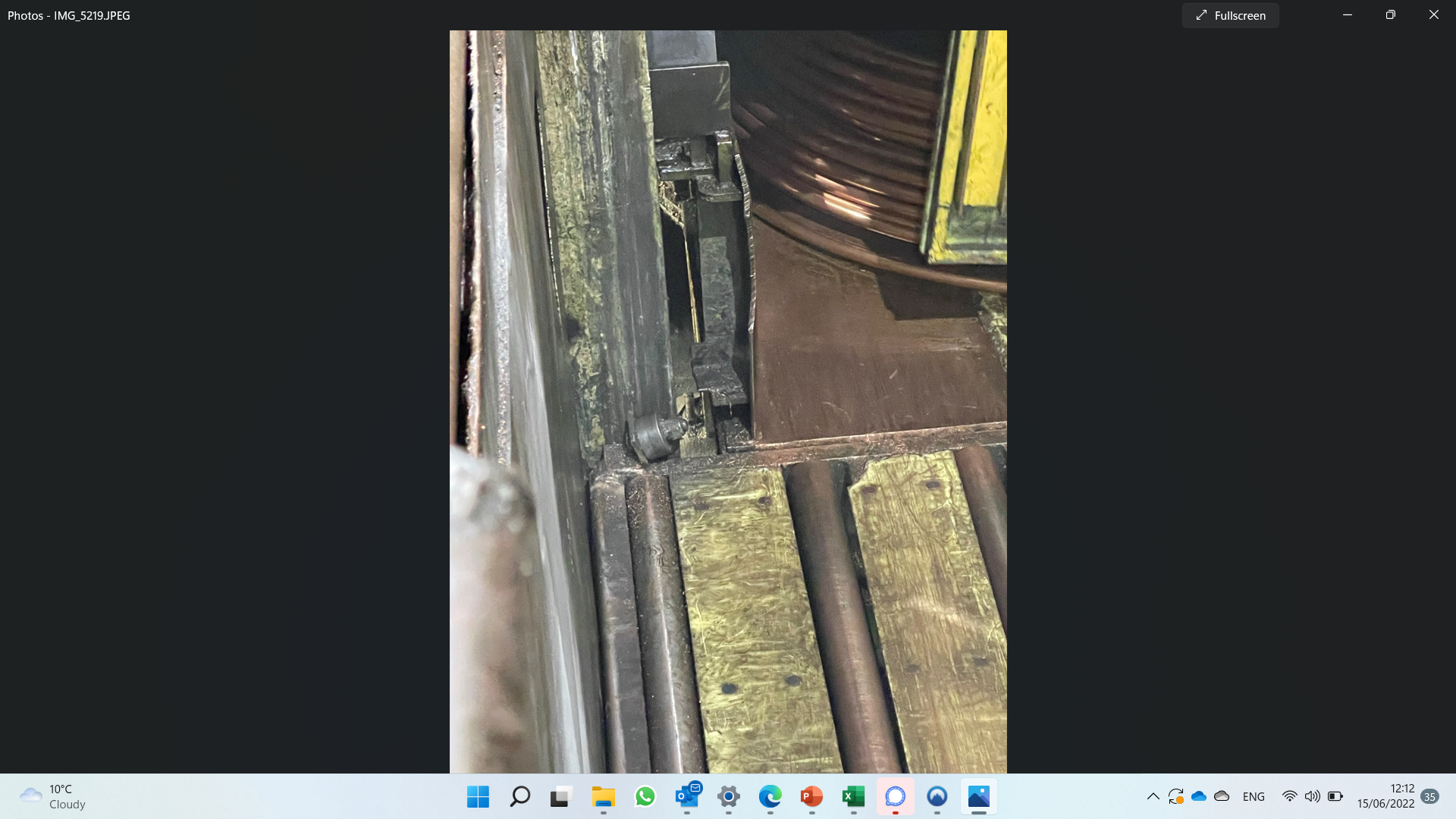
Worn and damaged equipment guides. Components like these had been degrading for months or years without replacement.
One isolator had been broken and waiting for parts since 2019 — three years before our visit. You probably have realized that it does not take 3 years to receive parts for an isolator.
There was no preventive maintenance system, no work order system, and no software for maintenance planning. The maintenance team existed solely to respond to breakdowns. They were aligned with the production shifts to cover reactive repairs, with no staff allocated for planned maintenance or permanent fixes. It was the definition of fire fighting.
Safety Was a Ticking Clock
The safety conditions were the most urgent finding. We documented hazards on every slide of our report. I realized why our consultant wanted hazard pay after reviewing the report.
Escape routes were blocked with parts and garbage. Stairways were covered in oil — slip hazards in an environment with heavy equipment and hot metal. Flammable materials were discarded near open furnaces. Firefighting equipment was poorly maintained with access blocked. Our team was amazed that no one had shut the operations down yet.
Oil spills and leaking equipment were visible on nearly every machine. Rotating mechanical components inside production equipment were loose, worn, and in some cases had become detached — creating the risk of parts flying off during operation. Wrong-size cotter pins were being used on critical equipment. Safety cables were incorrectly installed and would not have prevented a failure. This was not an isolated finding — we saw it on multiple pieces of similar equipment.
The accident data confirmed what we saw on the floor. Workers were getting injured by pry bars slipping, overhead doors coming down on carts, tubes falling off forklifts, and muscles tearing from lifting. The claims were adding up. Shockingly, people do not want to work in a factory that is unsafe. I am attached to my fingers and would not want to lose them operating one of these machines.
The Information Blackout
The factory had whiteboards. It had production boards. It even had a continuous improvement projects board with evidence of a past improvement event.
Almost none of it was current. Most board information was out of date. Some went back to 2014. A machine stop record had not been updated since December of the previous year (the assessment was in the summer). The shipping board was not being used. An accountability meeting that was supposed to happen at 10:00 AM daily was not held on the day we attended.
Visual management only works when it is maintained. When the boards go stale, the daily management system dies with them. And without daily management, there is no mechanism to catch problems early, assign ownership, or track corrective actions. Problems compound for weeks or months before anyone addresses them — if they are addressed at all.
Why SOPs Could Not Exist Yet
The client's original objective was to create Standard Operating Procedures and a training structure. That is what they thought they needed. What we had to explain was that SOPs cannot exist in an environment this unstable. A standard operating procedure documents the one best way to perform a task — but when the equipment does not work consistently, operators have to improvise a different workaround every shift. You cannot standardize a process that changes every time a machine breaks down or a component fails.
The prerequisites for SOPs are: safety standards in place, stability across the workforce, strong leadership, trained staff who understand the purpose of SOPs, and machinery that runs consistently. None of these existed at this factory. Before we could write a single SOP, we had to fix the foundation.
The Plan
We proposed tackling the operation in sequence — starting at the beginning of the production process (material receiving) and working through to the finished product. Each section would be a separate project, building on the stability created by the one before it.
The structure for each area:
- Establish KPIs — Define what good looks like before you start changing anything. You cannot improve what you do not measure.
- Root cause analysis — Stop guessing why things are failing. Use data to identify the actual causes of downtime, defects, and delays.
- Solve root causes to standardize operations — Fix the equipment, fix the process, make it repeatable. This is where the real work happens.
- Machine maintenance program — Build a preventive maintenance schedule based on the failure patterns identified in the root cause analysis. Move from reactive to planned.
- Safety and 5S — Address the immediate hazards, then build the discipline of organized, clean, safe workspaces. This is not cosmetic — it prevents injuries and reduces downtime from lost tools and cluttered work areas.
- Create SOPs — Only now, with stable equipment and standardized processes, can you write meaningful SOPs that operators can actually follow.
- Train staff to standard — Build the training structure, document operator versatility, and create the knowledge transfer system that prevents tribal knowledge from walking out the door with every retirement.
The HR challenges required a parallel strategy: fixing the new hire process (128 people leaving in the first two months is a recruitment and onboarding failure, not a workforce problem), addressing the absence system (which employees had learned to game for extra days off), building supervisor training and communication, and creating succession plans for the aging workforce — particularly the maintenance team with an average age of 59.
What This Assessment Teaches
This factory was not failing because of one big problem. It was failing because dozens of small problems had been allowed to compound over years. A death by a thousand cuts type of situation. Equipment that should have been repaired was patched. Processes that should have been standardized were improvised. Data that should have been tracked was ignored. People who should have been trained were thrown in and left to figure it out.
The fix was not a new piece of technology or a single brilliant insight. It was a systematic assessment of every area, a prioritized plan, and the discipline to execute it step by step. It reinforced our standard observation: there is no magic bullet. Instead the hard work of building systems and having the discipline to hold to those systems.
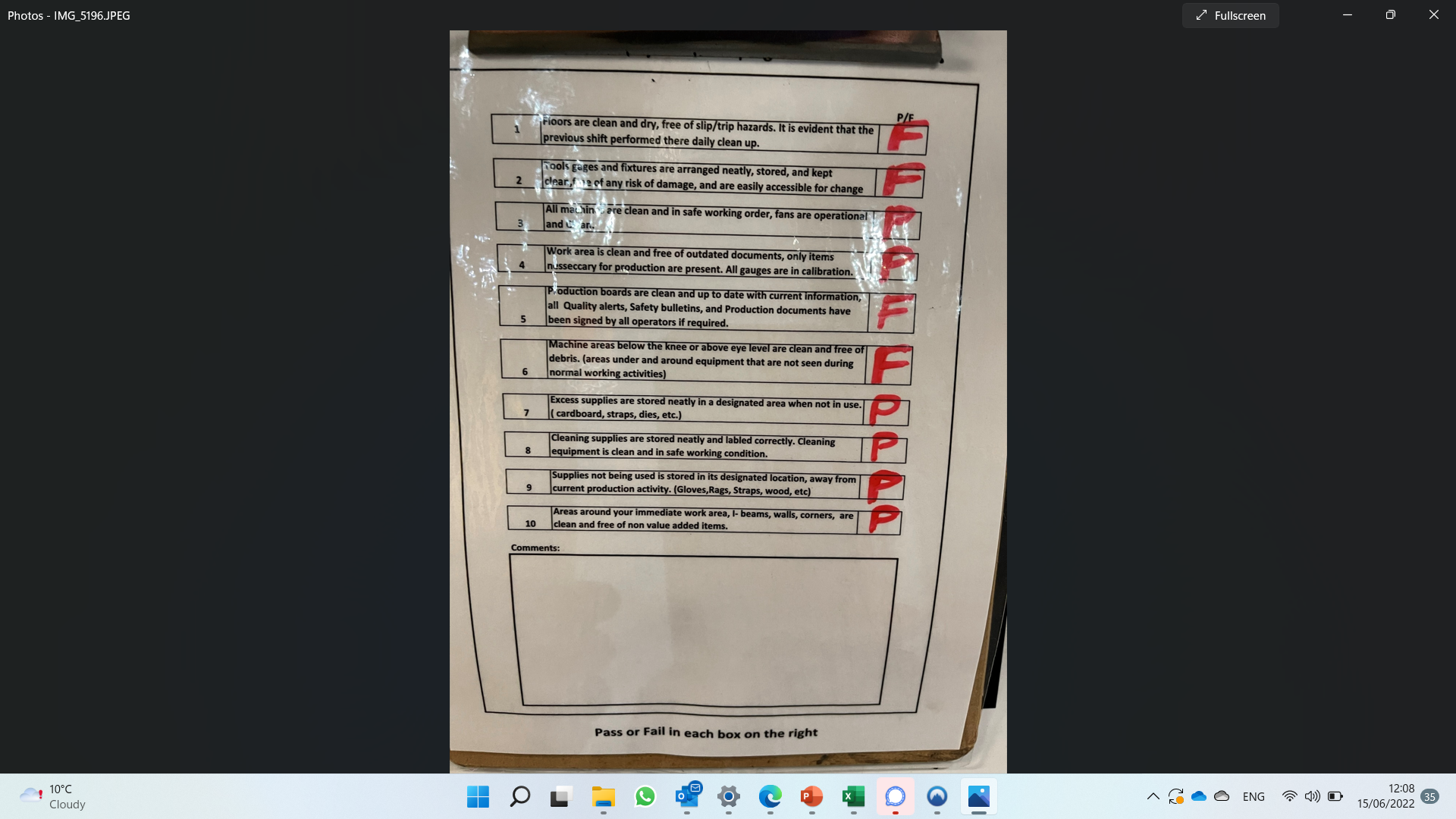
A housekeeping audit checklist found on-site. The factory had the tools to assess itself — the results speak for themselves.
Every factory turnaround we have done reinforces the same lesson: the problems are always the fundamentals. Daily management. Standard work. Basic maintenance. The factories that fail are not failing because they lack resources. They are failing because they lost discipline in the basics — and nobody stopped to fix it before everything started breaking at once.
Dealing with a struggling factory?
Manufacturing Transformation Group conducts factory assessments across the US, Mexico, China, Vietnam, and Europe. We identify the highest-impact problems, build a prioritized action plan, and stay engaged through implementation. Get in touch — most turnarounds show measurable improvement within the first 30 days.