

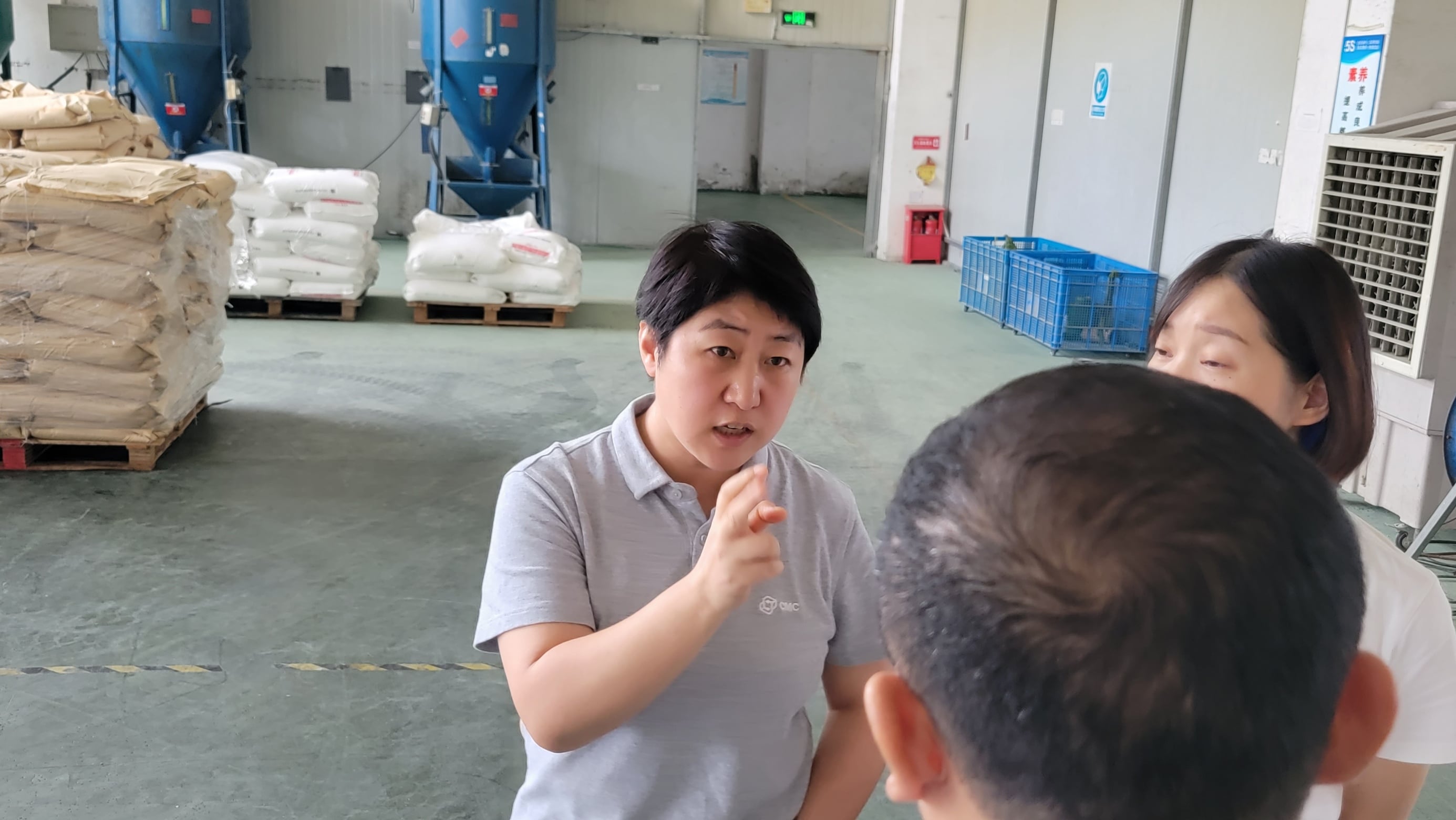
Most consulting firms hand you a report and leave. MTG is not like most consulting firms. Instead of running from responsibility for our clients' manufacturing operations, we ran towards it and take over temporary leadership of their factory.
A Netherlands-based manufacturer of electric garden tools asked us to do something unusual: step in as interim General Manager of their factory in Shandong Province, China.
The factory had 60 employees, about 10,000 square meters of floor space, and 20 years of history. It exported 99% of its products to Europe. On paper, it should have been running well yet it was suffering something that is not easily shown on paper: poor morale. Departments were segmented and not communicating. Each worked suspicious of each other rather than collaborating like a team.
Here is what we found, what we changed, and what happened.
Why They Called Us
We had already spent six months doing lean improvement work at this factory. The results were real -- inventory turnover dropped from 116 days to 66 days, assembly efficiency improved 40%, delivery lead time was cut in half, and rework rate fell by 50%.
The management team was an obstacle to further improvements because they could not effectively work together. Mid-level managers were not working together. Internal conflicts were constant. Departments operated in silos, protecting their territory instead of solving problems. The lean improvements we built were being undermined by a culture that resisted change.
The CEO in the Netherlands could see something was wrong but could not pinpoint who was the problem from 8,000 kilometers away. She suspected some managers were not capable of growing with the company, but did not know which ones.
So the company asked us to do something we do not often have to do: run the factory and provide hiring support while they look for a new general manager. While not common, it is not the first time a client has asked us to do such a thing. We did it in Poland, in China, and in the US.
What We Found in the First Week
When you are a consultant, people perform for you. When you are the boss, you see who people really are.
Within the first week, the dynamics became clear:
Two production supervisors doing one job. The factory had two production supervisors covering different shifts, but their responsibilities overlapped so heavily that neither was accountable for anything. When something went wrong, each pointed at the other.
A finance manager who could not manage finance. Monthly reports were incomplete, inconsistent, and arrived late. The CEO was making decisions based on bad data.
An engineering manager who had stopped engineering. The engineering department had become a filing cabinet -- maintaining old drawings but contributing nothing to process improvement or new product development.
Meetings that accomplished nothing. The CEO had a series of weekly one-on-one calls with the factory manager, finance, HR, and procurement. Each person told the CEO what they thought she wanted to hear. Nobody heard what the other departments were saying. Decisions were made in isolation and contradicted each other.
No cross-functional communication. Production did not talk to purchasing. Purchasing did not talk to quality. Quality did not talk to engineering. Each department had built walls around itself, and the factory manager -- who should have been breaking those walls down -- was part of the problem.
None of these are problems unique to China. We have seen similar challenges in Europe, Canada, and the United States. It is a question of providing proper leadership.
What We Changed
We had two months. Here is what we did.
Restructured the Organization
We merged, moved, and eliminated roles:
- Combined the two production supervisor positions into one. The stronger supervisor kept the role; the other was reassigned to lead the lean improvement program -- a role that matched his actual strengths.
- The production deputy supervisor became the new quality manager. He had the right eye for detail but had been wasted in a half-accountability role.
- The finance manager and engineering manager were both let go. We recruited replacements and managed the transition.
- The OPL (order processing) department was merged into the sales team. The domestic and export order management functions were consolidated under one manager.
- Engineering was folded into a new R&D department with a newly hired R&D manager.
- The factory manager was promoted to Deputy General Manager -- a recognition of his operational knowledge while giving him clearer authority.
Total headcount of indirect staff did not change. We did not add people nor remove any more than was necessary. We rearranged them so that every person had clear accountability and no overlapping responsibilities.
Killed Useless Meetings, Created One That Mattered
We eliminated two recurring meetings that produced no decisions and no follow-up. In their place, we established one weekly cross-departmental management meeting.
Every department head in the same room, at the same time, discussing the same problems. No more one-on-one calls where each manager told the CEO a different story. For the first time, procurement heard what production needed. Quality heard what engineering was working on. Finance understood why delivery was late.
The CEO's calendar went from six separate weekly calls to one meeting where she could hear the full picture. It is a difficult task to schedule but worth the effort. Don't build meetings around existing work schedules; build work schedules around critical meetings (like this one).
Fixed the Reporting
The factory had been sending the CEO separate monthly reports from purchasing and production -- each formatted differently, each telling a partial story. We consolidated everything into a single monthly operations report covering:
- Shipment fulfillment rates
- Financial analysis
- Lean improvement progress
- Quality metrics
- Production output
For the first time, the CEO could see the whole factory's performance on two pages instead of piecing it together from five different emails. As a CEO myself, I can appreciate this. Keep track of multiple elements within a company is difficult to begin with; even worse when you have scattered operations or are far away.
Redesigned Incentives
The existing incentive plan had no measurable criteria. People were evaluated on vague impressions rather than results. We replaced it with:
- Annual KPIs for every manager -- specific, measurable targets tied to their department's performance
- A "Skills Star of the Year" award recognizing operators who cross-trained and developed new capabilities
- 5S audit scores incorporated into team performance evaluations
Built the Foundation for What Comes Next
We increased the frequency of Gemba walks and 5S audits. Not because we love audits -- because regular shop floor presence by management is the single fastest way to change factory culture. When the boss walks the floor every day and asks questions, people start paying attention to the details.
We also led the recruitment process for the new R&D manager and finance manager, ensuring the replacements were people who could grow with the company rather than repeat the same patterns.
What Happened After We Left
The goal was never to run the factory permanently. It was to create the conditions where the factory could run itself. MTG's goal is always to work ourselves out of a job.
After two months, we handed operations back to the newly promoted Deputy GM and the restructured management team. The lean improvement program that had been stalling due to management resistance could now move forward because the resistors had been reassigned or replaced.
The factory went from a place where departments fought each other to a place where they met weekly and solved problems together. The CEO went from managing by guesswork to managing by data. And the employees -- many of whom had been there for over a decade -- finally had clarity on what their jobs actually were.
Why This Matters
Most factory problems are not technical. They are organizational and people related.
The equipment works. The processes are documented. The workers are capable. But the management structure has calcified over years of avoiding hard decisions. The wrong people are in the wrong roles. Communication flows through informal channels instead of structured systems. And the owner -- especially when the owner is in a different country -- cannot see what is actually happening on the floor.
An interim GM engagement is not about replacing people with consultants. It is about doing the hard work that internal management cannot do to itself. Firing an underperforming manager is nearly impossible when you have worked next to them for fifteen years. Merging departments is terrifying when you do not know if it will work. Redesigning incentives means admitting the old ones were broken.
An outsider can do these things because they have no history, no allegiances, and no reason to protect the status quo. They can see what insiders cannot -- and more importantly, they can act on it.
Is This Right for Your Factory?
Not every factory needs an interim GM. But if you recognize any of these patterns, it might be time to consider it:
- Your lean or improvement programs keep stalling despite good initial results
- You suspect management problems but cannot identify exactly who or what
- Your factory is in a different country and you cannot be there to see what is happening
- Departments do not communicate with each other
- You have managers who have been in their roles for years but the factory is not improving
- Monthly reports do not give you a clear picture of what is actually going on
We did not plan to offer interim GM services. A client asked us to try it, and the results convinced us it should be part of what we do. Sometimes the factory does not need a new process or a new machine. It needs someone to walk in, see clearly, and make the changes that everyone knows are needed but nobody wants to make.
Manufacturing Transformation Group provides interim factory management, lean implementation, and operational improvement across China, Vietnam, Mexico, and the United States. If your factory's management structure is the bottleneck, let's talk.